Insights

Thinking on Change,
Strategy & Leadership

Essays, reflections, and analysis at the intersection of academic rigour and management practice.

Why Leaders Facing the Same Challenge Make Different Decisions

Leadership

Why Leaders Facing the Same Challenge Make Different Decisions

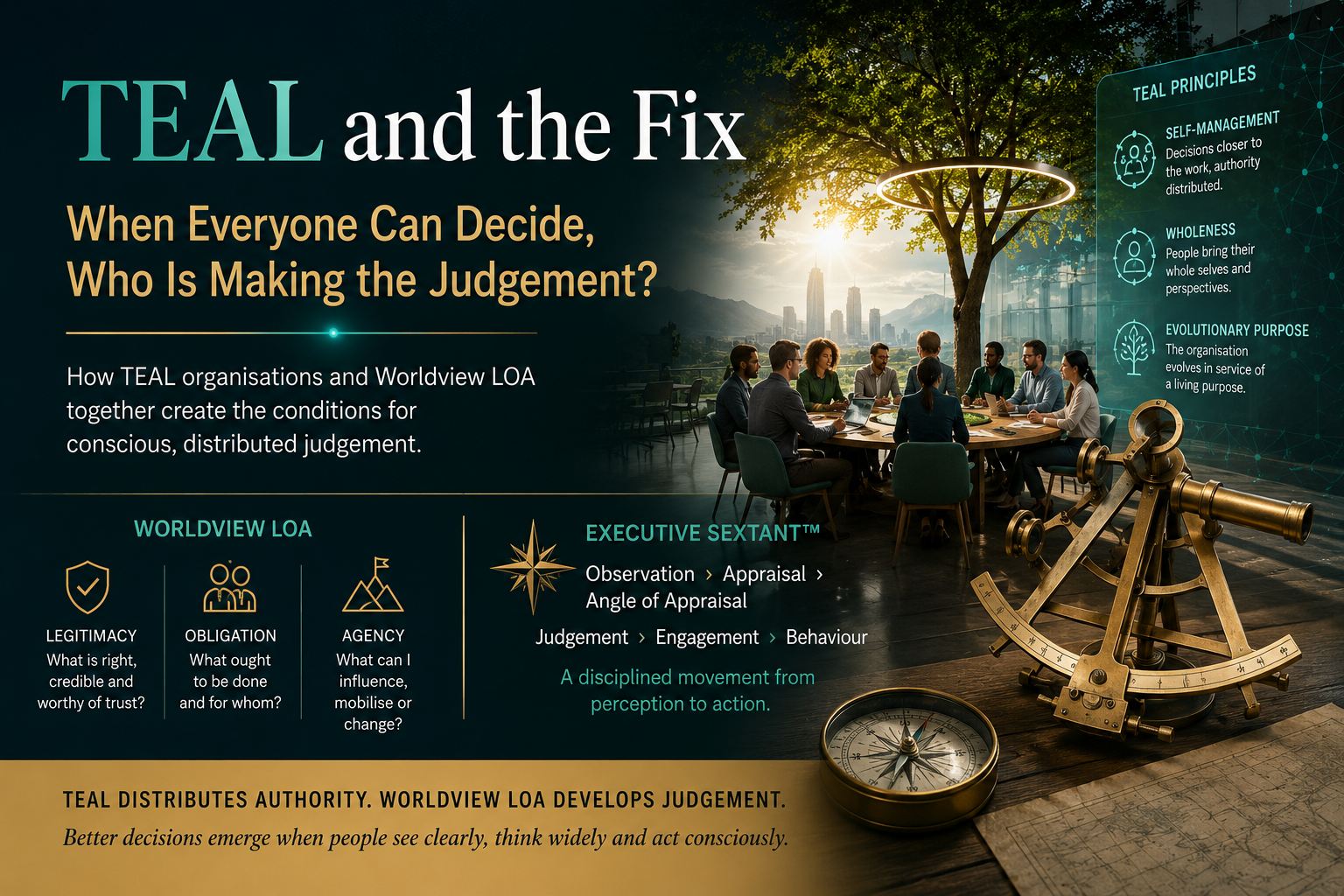
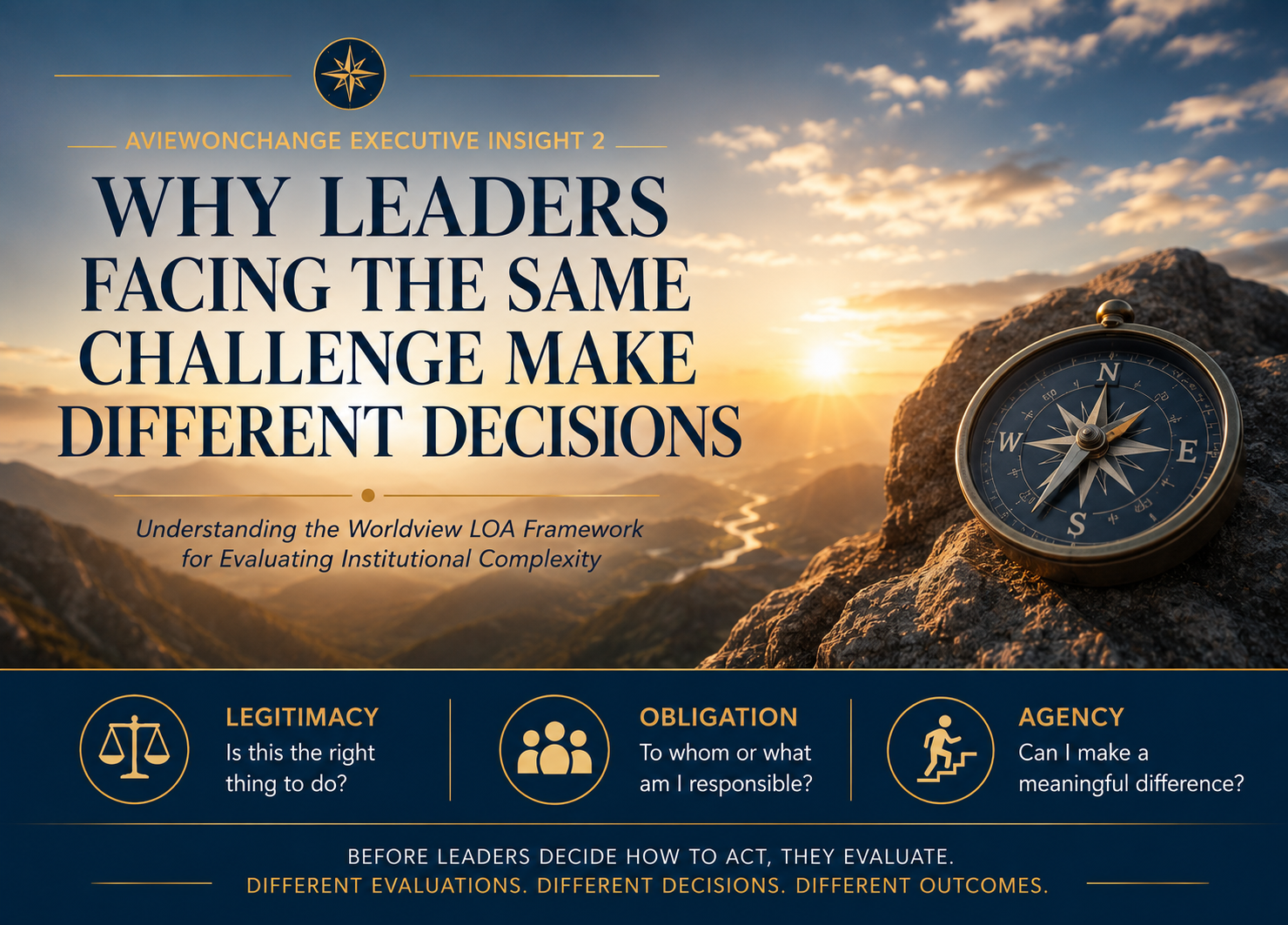
Jan 2025 This Executive Insight integrates Chin and Benne's change strategies, Lewin's three-stage model, and the Worldview LOA Framework to explain why identical change initiatives produce different outcomes. Sustainable transformation occurs when leaders internalise change, activate supportive worldviews, and consistently enact new behaviours, accelerating organisational change through meaningful commitment rather than compliance.
Empowered Judgement, Inclusive Leadership

Leadership

Empowered Judgement, Inclusive Leadership

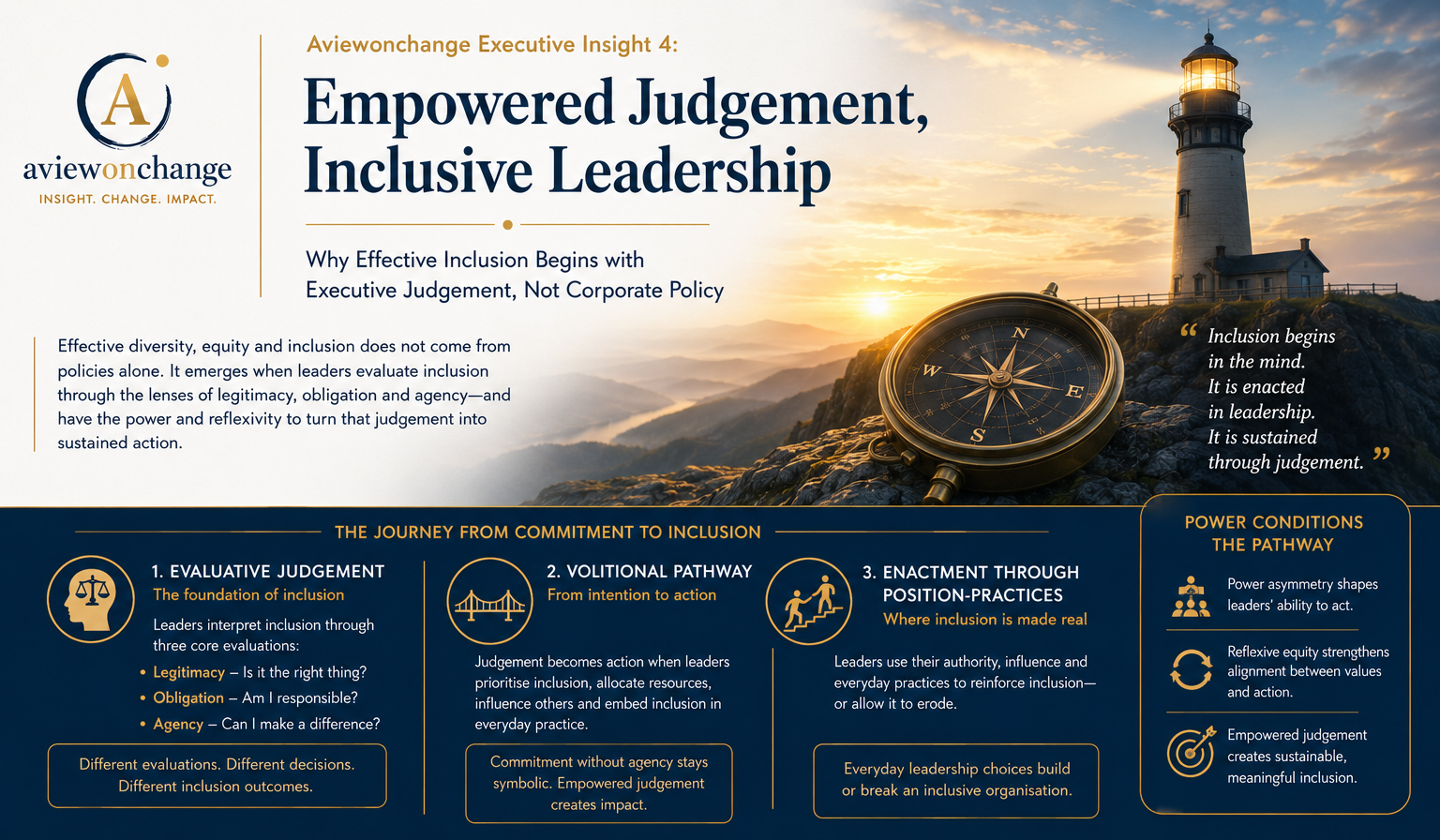
This Executive Insight argues that effective diversity, equity and inclusion depend less on organisational policies than on executive judgement. Using the Worldview LOA Framework, it shows how leaders’ evaluations of legitimacy, moral obligation and agency determine whether inclusion becomes symbolic compliance or sustained, transformative organisational practice.

The Missing Dimension of Organization Design

Transformation

The Missing Dimension of Organization Design

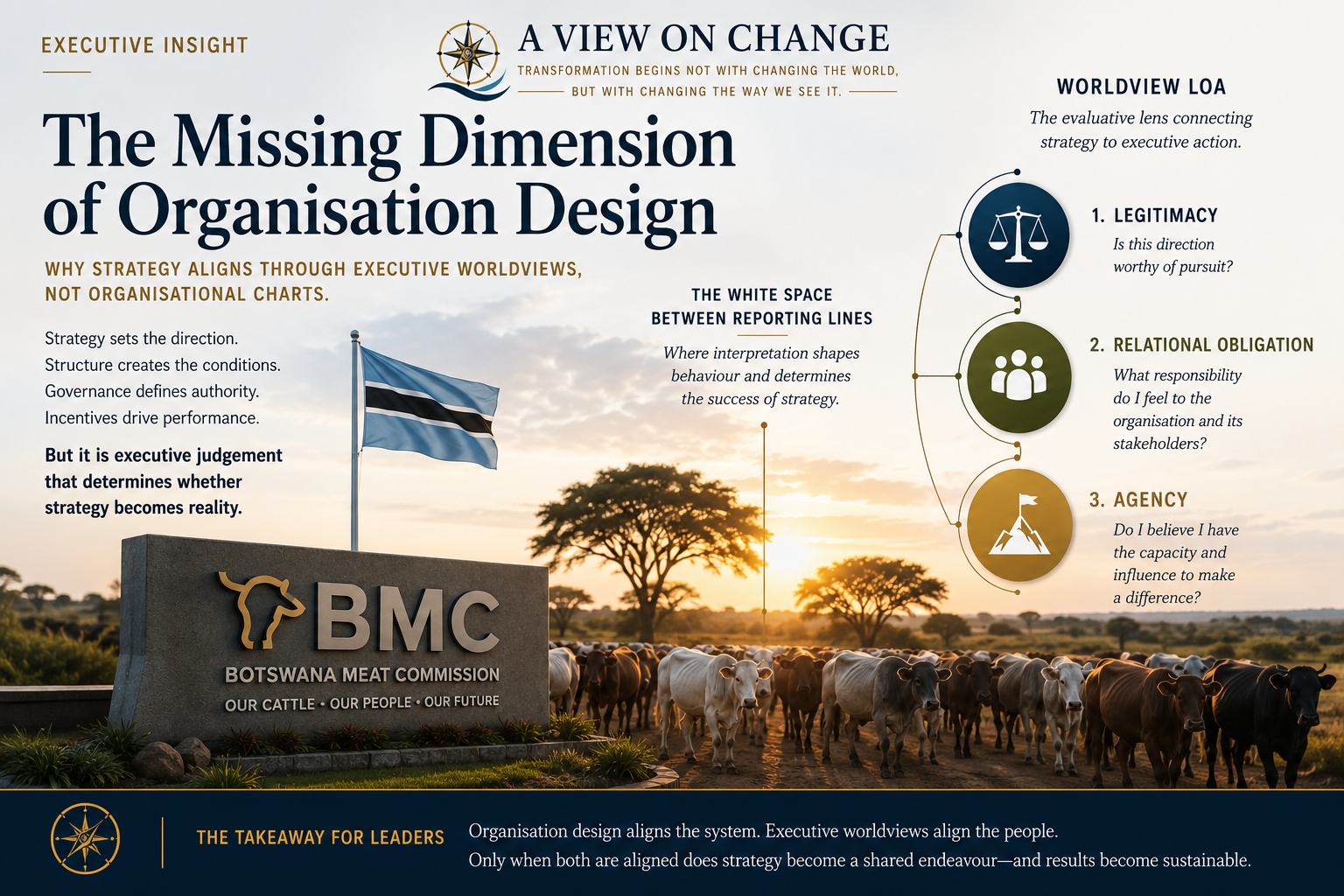
This Executive Insight argues that strategy, organisation design and governance alone cannot ensure successful transformation. Sustainable execution depends on how executives interpret organisational change through judgments of legitimacy, obligation and agency. Aligning executive worldviews—not merely structures—creates shared commitment, consistent action and enduring strategic transformation.

The White Space Between Reporting Lines

Change Management

The White Space Between Reporting Lines

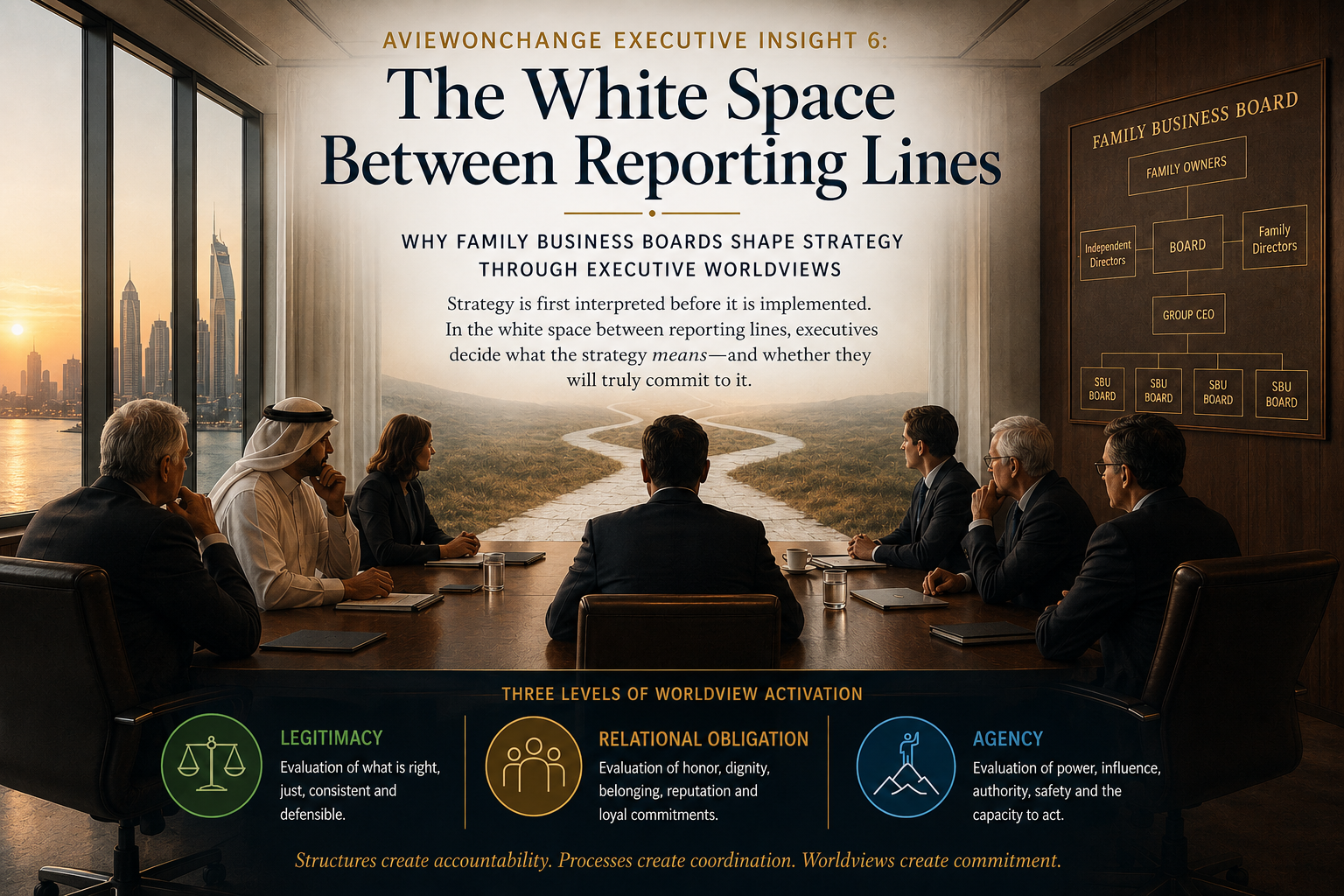
This Executive Insight argues that governance structures alone cannot deliver strategic transformation in family businesses. Using the Worldview LOA Framework, it shows how executive interpretations of legitimacy, relational obligation and agency shape commitment, revealing that sustainable transformation occurs in the “white space” between governance and executive judgement.

Beyond the Western Leadership Playbook

Transformation

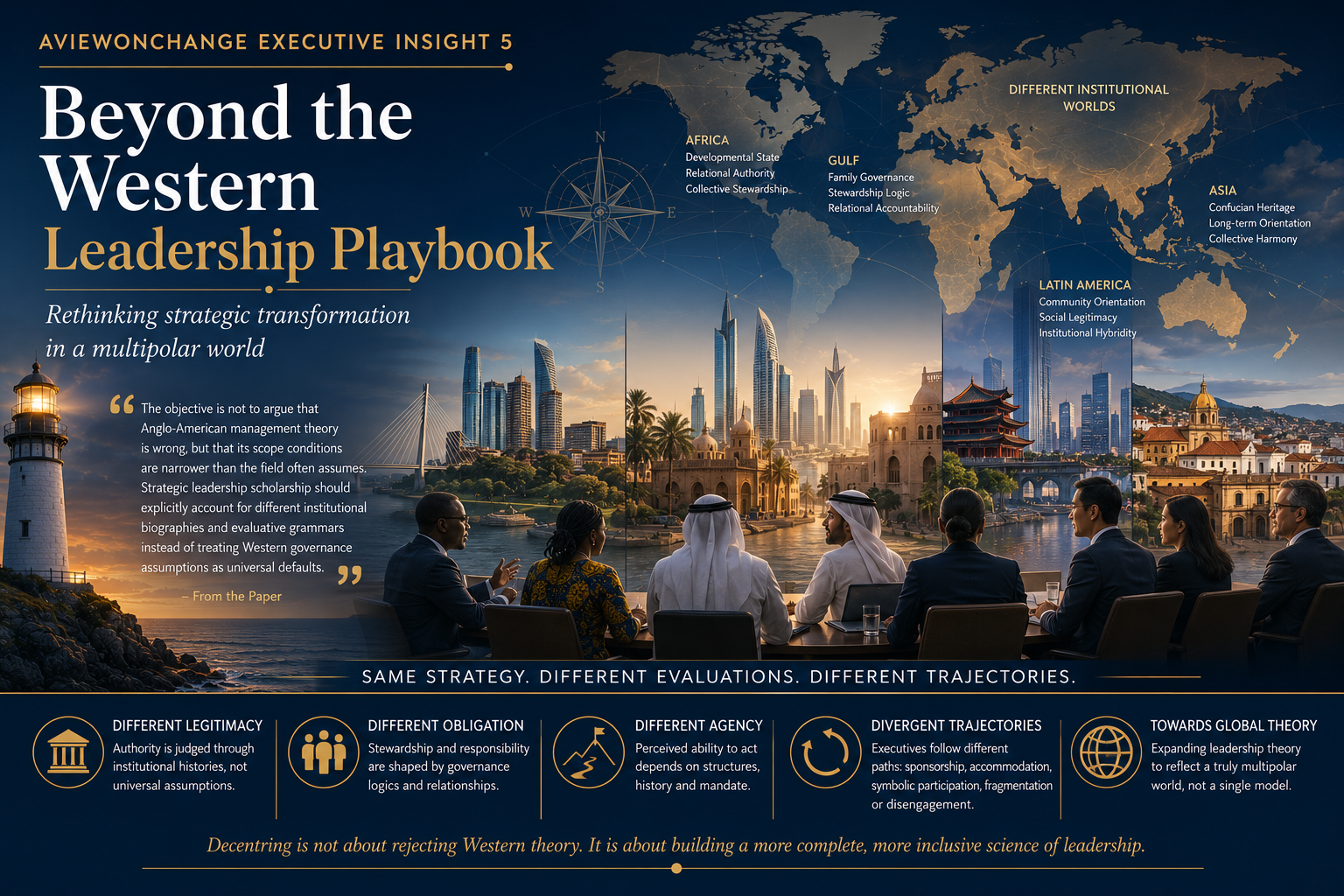
Beyond the Western Leadership Playbook

This Executive Insight argues that leadership theories developed in Anglo-American contexts cannot fully explain strategic transformation across diverse institutional environments. The Worldview LOA Framework offers a globally relevant lens by explaining how executives evaluate legitimacy, obligation and agency, enabling organisations to lead change more effectively across different governance systems.

Changing the Game without Losing the Team

Strategy

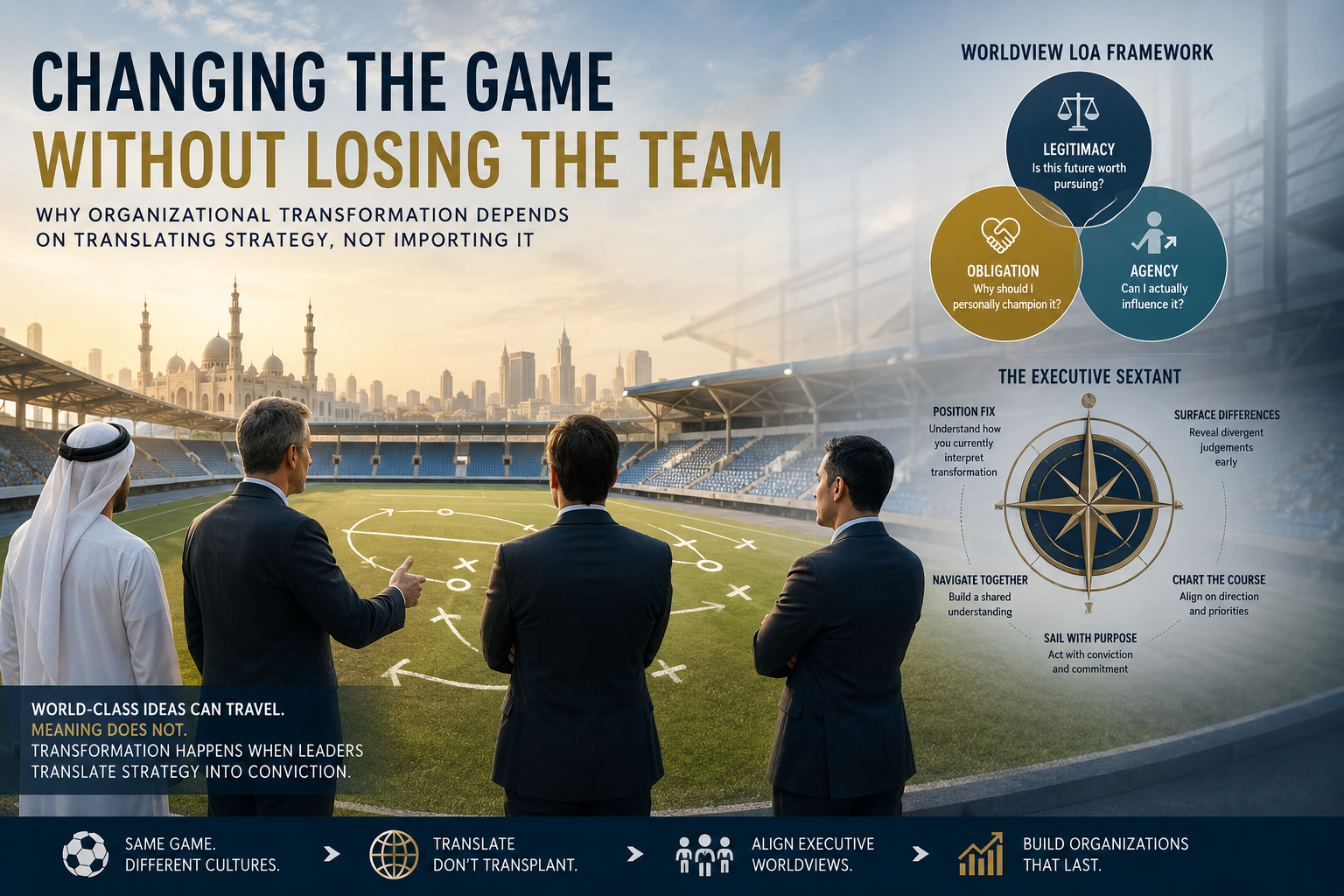
Changing the Game without Losing the Team

Successful organizational transformation is not achieved by importing global best practices but by translating them into local institutional realities and shared executive conviction. Lasting change occurs when leaders align around legitimacy, obligation, and agency—creating a common understanding that enables strategy, organization design, and execution to reinforce one another.

The Spiritual Foundation of the Worldview LOA Framework

Strategy

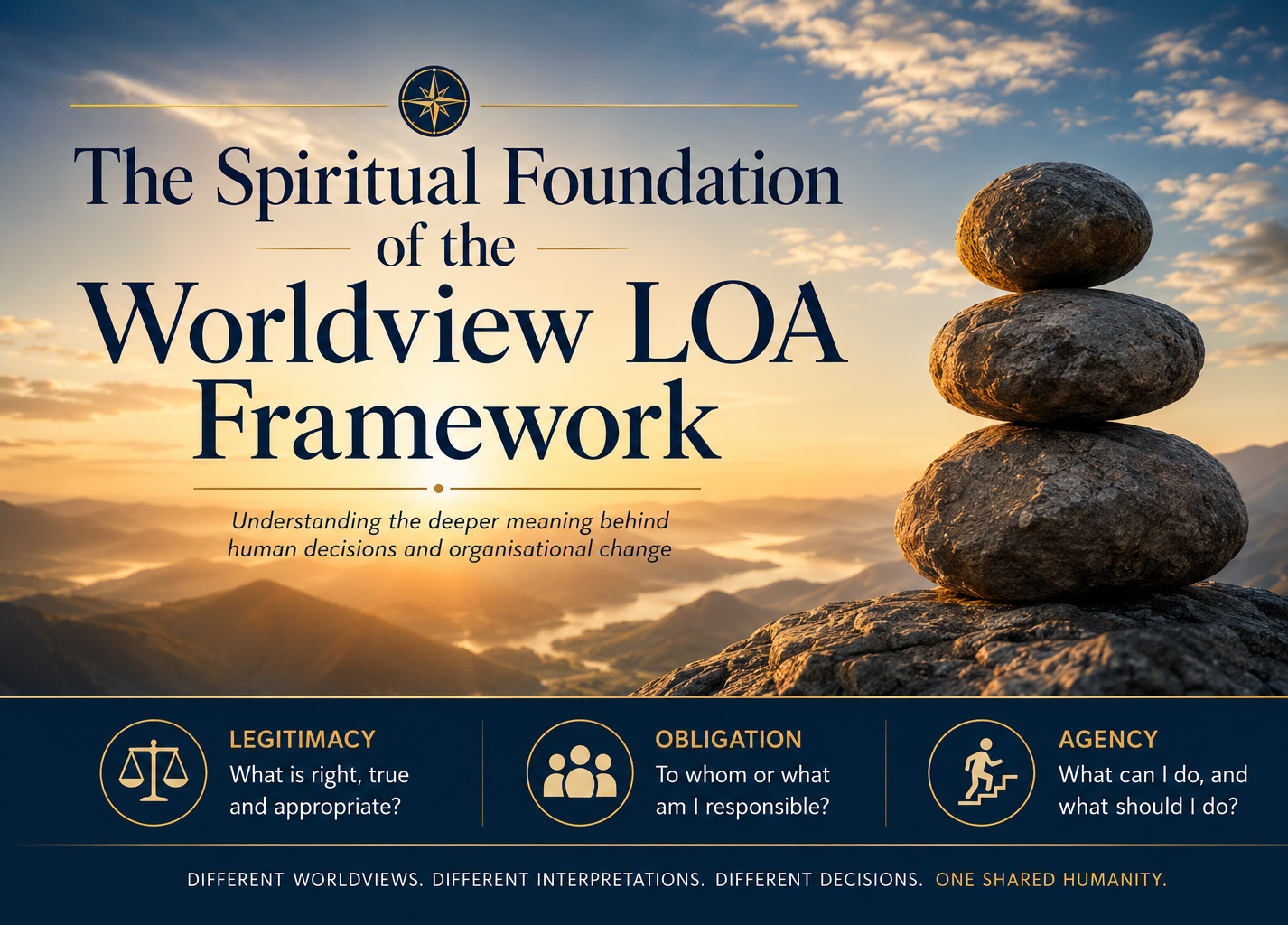
The Spiritual Foundation of the Worldview LOA Framework

Spirituality is not confined to religion but reflects the deep convictions through which people interpret reality, define responsibility and exercise influence. Building on the Three Colors of Worldview, the Worldview LOA Framework explains how legitimacy, obligation and agency shape executive judgement, making transformation fundamentally a journey of meaning before behaviour.

Navigating Causal Explanation

Research Methods

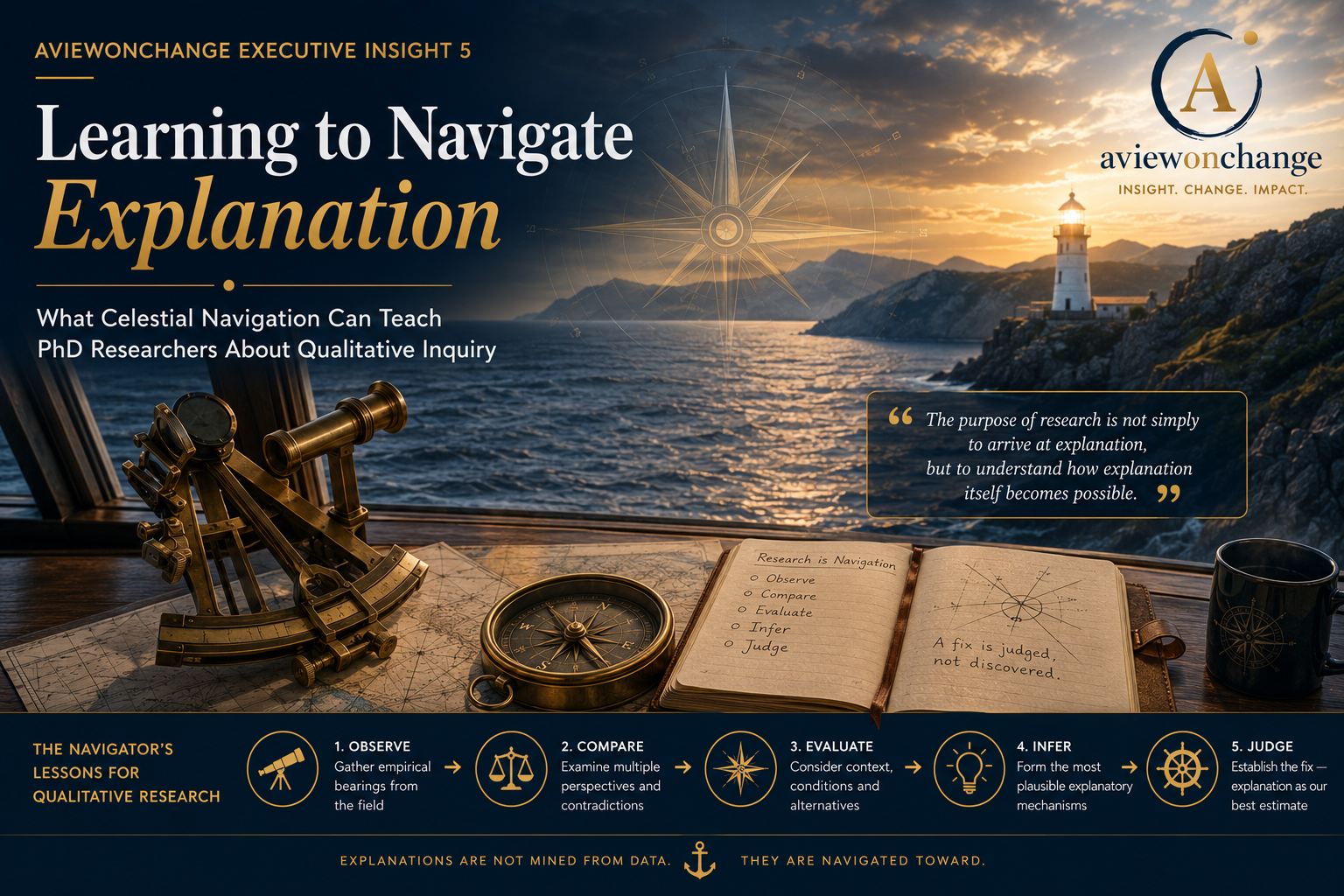
Navigating Causal Explanation

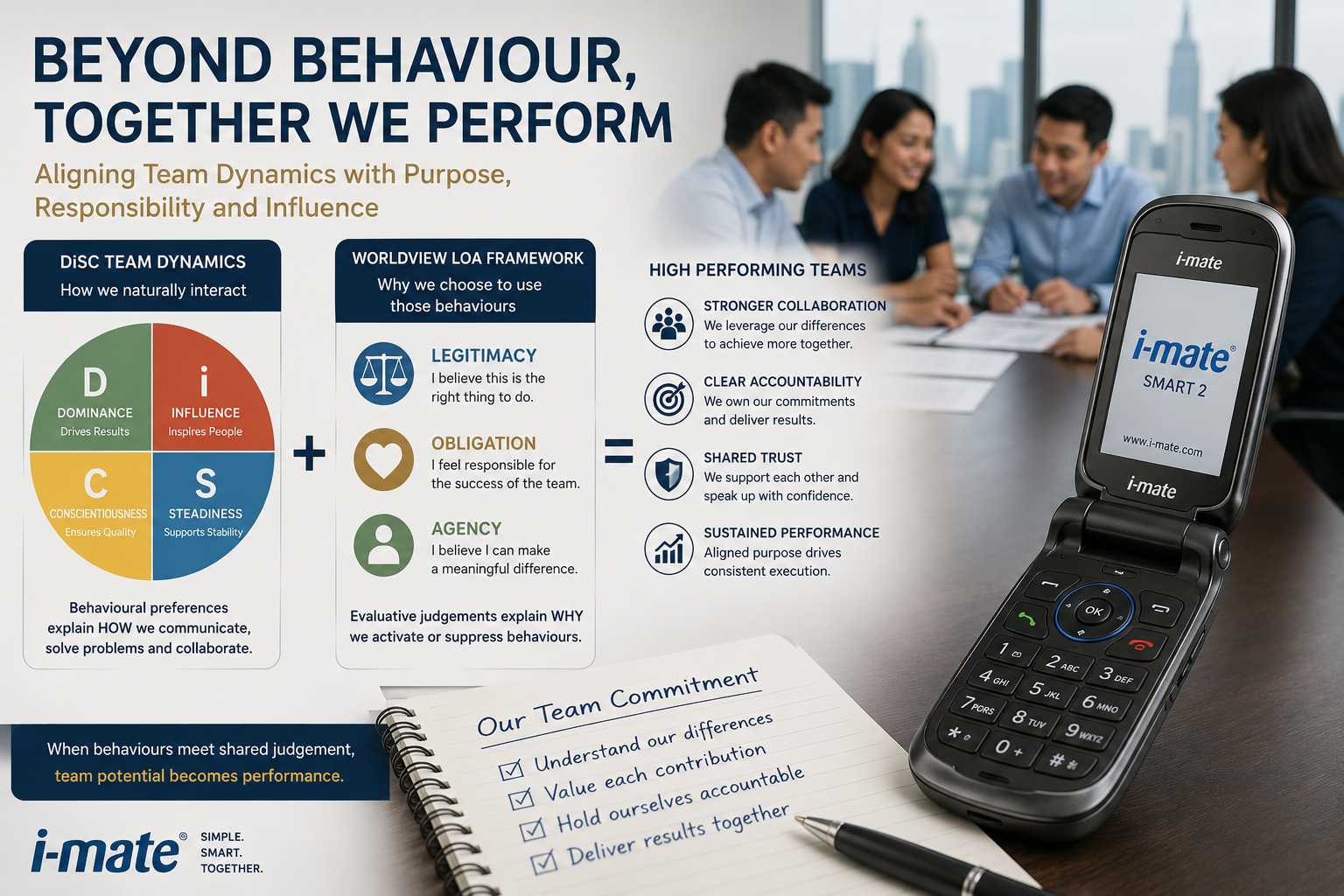
Qualitative research is less about discovering explanations than navigating toward them. Like celestial navigators establishing a position from multiple bearings, researchers construct explanations through disciplined judgement, comparing evidence, evaluating competing interpretations and refining understanding. Explanation is not found in the data—it emerges through rigorous reasoning and continual course correction. Beyond Behaviour – Together We Perform Transformation Oct 2025 High-performing teams are built on more than behavioural diversity and effective performance systems. While tools like DiSC explain how people prefer to work, the Worldview LOA Framework explains why they choose to contribute. Sustainable collaboration emerges when legitimacy, obligation and agency align, transforming individual strengths into collective organisational performance.

Before the Organization Chart

Strategy

Before the Organization Chart

Organisation design is not about drawing better organisation charts—it is about improving executive judgement. Before structures can support strategy, leaders must establish a shared understanding of legitimacy, obligation and agency. Like navigators taking a sextant fix before setting sail, executives must first determine their position before confidently redesigning their organisation.

Changing the Game without Losing the Team

Strategy

Changing the Game without Losing the Team

Successful organizational transformation is not achieved by importing global best practices but by translating them into local institutional realities and shared executive conviction. Lasting change occurs when leaders align around legitimacy, obligation, and agency—creating a common understanding that enables strategy, organization design, and execution to reinforce one another.

Beyond Behaviour – Together We Perform

Transformation

Beyond Behaviour – Together We Perform

High-performing teams are built on more than behavioural diversity and effective performance systems. While tools like DiSC explain how people prefer to work, the Worldview LOA Framework explains why they choose to contribute. Sustainable collaboration emerges when legitimacy, obligation and agency align, transforming individual strengths into collective organisational performance.

Three Strategies, Three Phases – and Three Moments of Change

Change Management

Three Strategies, Three Phases – and Three Moments of Change

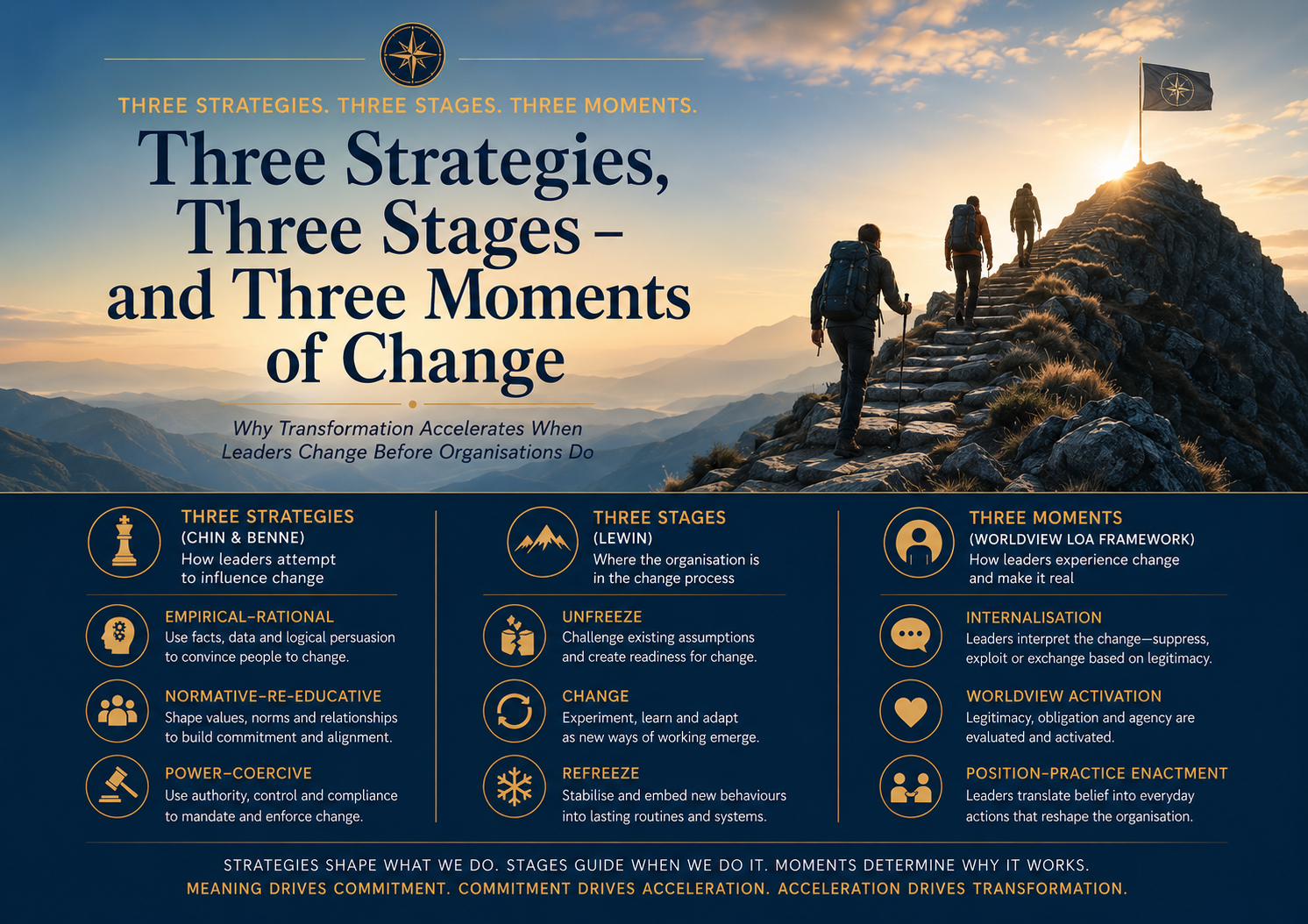
Successful transformation depends on more than choosing the right strategy or following the right process. By integrating Chin and Benne’s change strategies, Lewin’s stages, and the Worldview LOA Framework’s three moments of change, leaders can understand why people respond differently and accelerate change through shared meaning, commitment, and purposeful action

Beyond the Game

Strategy

Beyond the Game

Great strategy begins not with objectives, but with understanding the changing environment in which an organisation competes. Sustainable execution depends on shared executive judgement. When leaders align around legitimacy, obligation and agency, strategy becomes more than a plan—it becomes a collectively understood future that people genuinely own and enact.

AI and the Fix

Change Management

AI and the Fix

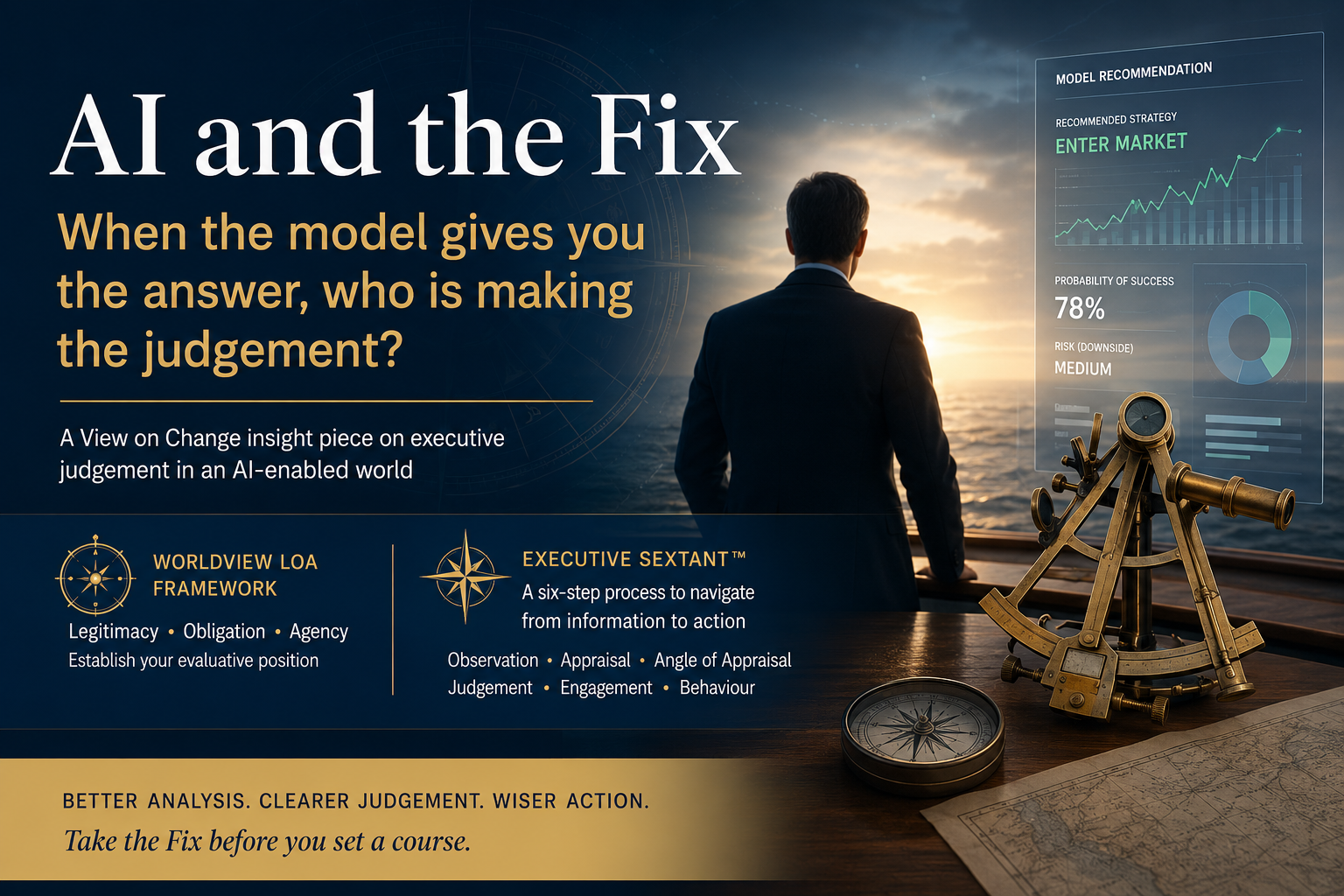
AI can analyse complexity, expose patterns and generate sophisticated recommendations. Yet the executive remains responsible for establishing an evaluative position, recognising the worldview shaping interpretation, exercising judgement and deciding what ought to be done. The challenge is not whether AI can provide answers, but whether leaders still know how to judge them.

When Intelligence Becomes Abundant, Executive Judgement Matters More

Transformation

When Intelligence Becomes Abundant, Executive Judgement Matters More

What if AI makes intelligence abundant, but executive judgement becomes the scarce capability—determining what knowledge means, what is legitimate, and what is worth doing?

Stay in the Conversation

New essays and insights on change, leadership, and strategy — published when there is something worth saying.

Get in Touch
© 2026 Dr. George Kesselaar. All rights reserved.

Insights

Thinking on Change,
Strategy & Leadership

Essays, reflections, and analysis at the intersection of academic rigour and management practice.

Why Leaders Facing the Same Challenge Make Different Decisions

Leadership

Why Leaders Facing the Same Challenge Make Different Decisions

Jan 2025 This Executive Insight integrates Chin and Benne's change strategies, Lewin's three-stage model, and the Worldview LOA Framework to explain why identical change initiatives produce different outcomes. Sustainable transformation occurs when leaders internalise change, activate supportive worldviews, and consistently enact new behaviours, accelerating organisational change through meaningful commitment rather than compliance.
Empowered Judgement, Inclusive Leadership

Leadership

Empowered Judgement, Inclusive Leadership

This Executive Insight argues that effective diversity, equity and inclusion depend less on organisational policies than on executive judgement. Using the Worldview LOA Framework, it shows how leaders’ evaluations of legitimacy, moral obligation and agency determine whether inclusion becomes symbolic compliance or sustained, transformative organisational practice.

The Missing Dimension of Organization Design

Transformation

The Missing Dimension of Organization Design

This Executive Insight argues that strategy, organisation design and governance alone cannot ensure successful transformation. Sustainable execution depends on how executives interpret organisational change through judgments of legitimacy, obligation and agency. Aligning executive worldviews—not merely structures—creates shared commitment, consistent action and enduring strategic transformation.

The White Space Between Reporting Lines

Change Management

The White Space Between Reporting Lines

This Executive Insight argues that governance structures alone cannot deliver strategic transformation in family businesses. Using the Worldview LOA Framework, it shows how executive interpretations of legitimacy, relational obligation and agency shape commitment, revealing that sustainable transformation occurs in the “white space” between governance and executive judgement.

Beyond the Western Leadership Playbook

Transformation

Beyond the Western Leadership Playbook

This Executive Insight argues that leadership theories developed in Anglo-American contexts cannot fully explain strategic transformation across diverse institutional environments. The Worldview LOA Framework offers a globally relevant lens by explaining how executives evaluate legitimacy, obligation and agency, enabling organisations to lead change more effectively across different governance systems.

Changing the Game without Losing the Team

Strategy

Changing the Game without Losing the Team

Successful organizational transformation is not achieved by importing global best practices but by translating them into local institutional realities and shared executive conviction. Lasting change occurs when leaders align around legitimacy, obligation, and agency—creating a common understanding that enables strategy, organization design, and execution to reinforce one another.

The Spiritual Foundation of the Worldview LOA Framework

Strategy

The Spiritual Foundation of the Worldview LOA Framework

Spirituality is not confined to religion but reflects the deep convictions through which people interpret reality, define responsibility and exercise influence. Building on the Three Colors of Worldview, the Worldview LOA Framework explains how legitimacy, obligation and agency shape executive judgement, making transformation fundamentally a journey of meaning before behaviour.

Navigating Causal Explanation

Research Methods

Navigating Causal Explanation

Qualitative research is less about discovering explanations than navigating toward them. Like celestial navigators establishing a position from multiple bearings, researchers construct explanations through disciplined judgement, comparing evidence, evaluating competing interpretations and refining understanding. Explanation is not found in the data—it emerges through rigorous reasoning and continual course correction. Beyond Behaviour – Together We Perform Transformation Oct 2025 High-performing teams are built on more than behavioural diversity and effective performance systems. While tools like DiSC explain how people prefer to work, the Worldview LOA Framework explains why they choose to contribute. Sustainable collaboration emerges when legitimacy, obligation and agency align, transforming individual strengths into collective organisational performance.

Before the Organization Chart

Strategy

Before the Organization Chart

Organisation design is not about drawing better organisation charts—it is about improving executive judgement. Before structures can support strategy, leaders must establish a shared understanding of legitimacy, obligation and agency. Like navigators taking a sextant fix before setting sail, executives must first determine their position before confidently redesigning their organisation.

Changing the Game without Losing the Team

Strategy

Changing the Game without Losing the Team

Successful organizational transformation is not achieved by importing global best practices but by translating them into local institutional realities and shared executive conviction. Lasting change occurs when leaders align around legitimacy, obligation, and agency—creating a common understanding that enables strategy, organization design, and execution to reinforce one another.

Beyond Behaviour – Together We Perform

Transformation

Beyond Behaviour – Together We Perform

High-performing teams are built on more than behavioural diversity and effective performance systems. While tools like DiSC explain how people prefer to work, the Worldview LOA Framework explains why they choose to contribute. Sustainable collaboration emerges when legitimacy, obligation and agency align, transforming individual strengths into collective organisational performance.

Three Strategies, Three Phases – and Three Moments of Change

Change Management

Three Strategies, Three Phases – and Three Moments of Change

Successful transformation depends on more than choosing the right strategy or following the right process. By integrating Chin and Benne’s change strategies, Lewin’s stages, and the Worldview LOA Framework’s three moments of change, leaders can understand why people respond differently and accelerate change through shared meaning, commitment, and purposeful action

Beyond the Game

Strategy

Beyond the Game

Great strategy begins not with objectives, but with understanding the changing environment in which an organisation competes. Sustainable execution depends on shared executive judgement. When leaders align around legitimacy, obligation and agency, strategy becomes more than a plan—it becomes a collectively understood future that people genuinely own and enact.

AI and the Fix

Change Management

AI and the Fix

AI can analyse complexity, expose patterns and generate sophisticated recommendations. Yet the executive remains responsible for establishing an evaluative position, recognising the worldview shaping interpretation, exercising judgement and deciding what ought to be done. The challenge is not whether AI can provide answers, but whether leaders still know how to judge them.

When Intelligence Becomes Abundant, Executive Judgement Matters More

Transformation

When Intelligence Becomes Abundant, Executive Judgement Matters More

What if AI makes intelligence abundant, but executive judgement becomes the scarce capability—determining what knowledge means, what is legitimate, and what is worth doing?

Stay in the Conversation

New essays and insights on change, leadership, and strategy — published when there is something worth saying.

Get in Touch
© 2026 Dr. George Kesselaar. All rights reserved.